Oct 23, 2026Buying Guides
Ceramic Pet Bowls: A Wholesale Buyer's Guide to Sizes, Shapes and Safety
How to choose ceramic pet bowls for retail: match capacity to pet size, pick the right shape and height, check glaze and stability, and build a range that covers feeding, watering and slow feeding.
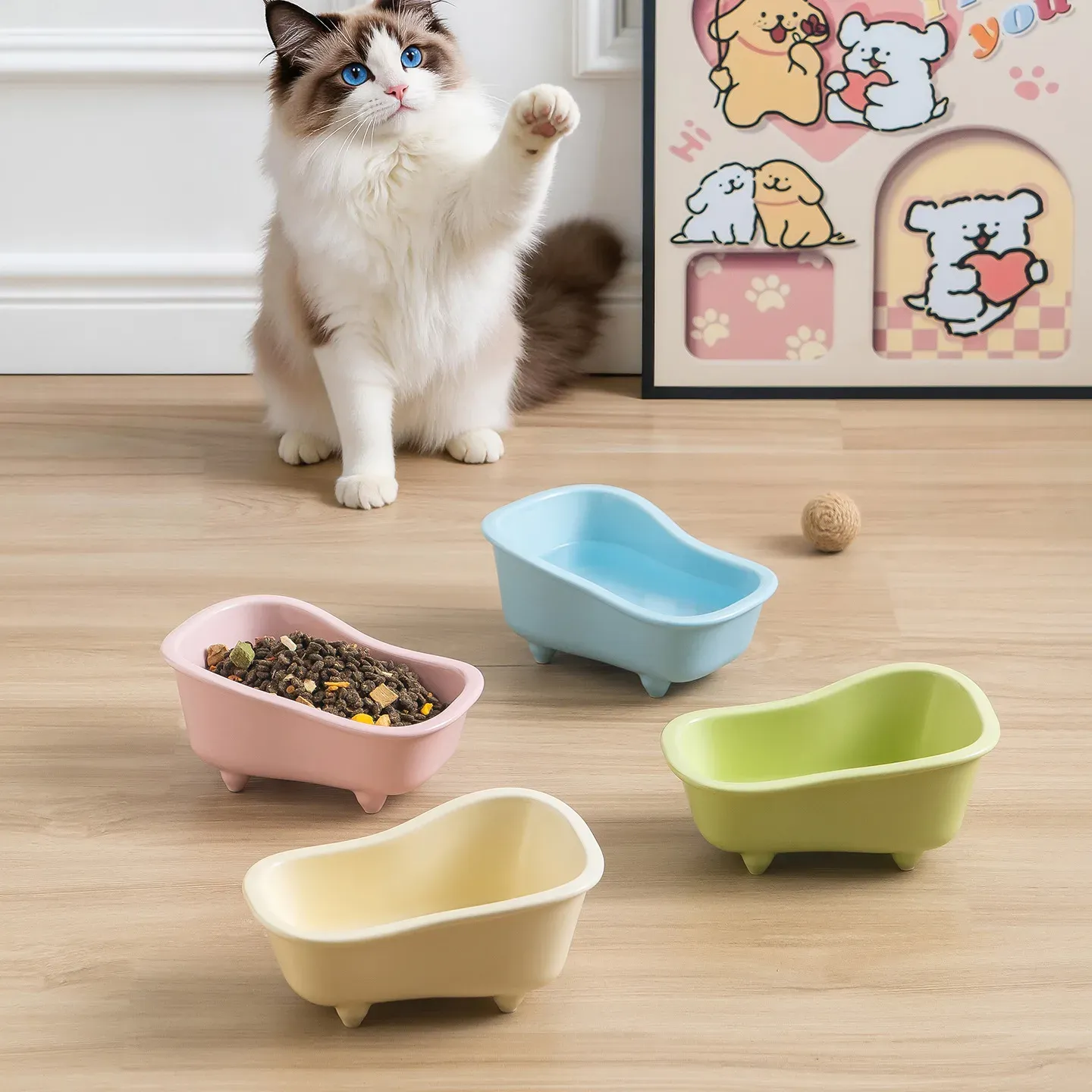
Ceramic is the premium end of the bowl shelf, and for good reason: it feels solid in the hand, it does not slide like thin plastic, and it photographs beautifully. The buying decision comes down to five checks - capacity for the pet's size, shape and height for feeding comfort, glaze and weight for safety and stability, easy cleaning, and a range that covers everyday feeding alongside slow-feeding and watering. This guide walks through each check using our own ceramic range, which runs from 150 ml paw-handle dishes to a 700 ml bathtub-shaped bowl.
Start With Capacity
Capacity is the first filter and the easiest one to get wrong. A 150-200 ml bowl suits kittens and toy breeds; 300-400 ml covers most cats and small dogs; 450 ml and up is where medium dogs begin. Our range spans 150 ml to 700 ml, so the same glaze family can often serve several pet sizes without a second supplier. Selling capacity as a size ladder - small, medium, large in one design - makes the shelf easier to shop and encourages customers to buy two bowls at once.
Shape and Height
Shape Follows the Pet
Shallow wide bowls suit flat-faced cats and small dogs, which struggle to reach deep dishes. Sloped and slanted bowls help cats keep their whiskers clear of the rim. Raised and elevated designs - the classic tall bowl on a stand - bring food up to a comfortable height for larger dogs and older pets. Novelty shapes sell on design: mushrooms, sunflowers, bathtubs, bread loaves and cat-face bowls all earn shelf space because the customer photographs them.
Height and the Stand
Elevated feeding is the fastest-growing format in the category. A bowl on a metal stand improves the eating angle for tall dogs and reduces neck strain for seniors, and the stand gives the product a furniture-like presence in the aisle. Check that the bowl seats securely in its ring - a rattling bowl reads as poor quality.
Glaze, Weight and Stability
Weight is a useful proxy for quality in ceramic. Our bowls run from roughly 150 g for a small paw-handle dish up to about 950 g for a large 600 ml bowl - and the heavier pieces are the ones that stay put when a dog eats enthusiastically. Look for smooth, even glaze inside and out, a fully glazed foot ring so the base does not scratch the floor, and no pinholes or rough patches in the food-contact area. Ask your supplier to confirm food-contact suitability of the glaze for the markets you sell into.
Cleaning and Everyday Use
Ceramic bowls should be easy to live with: smooth interiors wipe clean, and a wide opening lets a hand or sponge reach the bottom. For slow-feeder designs check that the maze pattern has no sharp internal corners where food collects. Tell customers plainly how to care for the bowl - hand washing is the safe default for glazed ceramic with stands or metal fittings.
Building a Ceramic Range
A compact but complete ceramic program usually needs four slots: one everyday shallow bowl for cats and small dogs, one sloped or whisker-friendly design, one elevated bowl with a stand, and one specialty format such as a slow feeder or a large-capacity dog bowl. Our 26-design ceramic range covers those slots with 15-24 cm diameters and 20-72 pieces per carton, so a mixed first order is practical. Seasonal and gift-oriented shapes - bread, bathtub, sunflower - work well as the fifth, impulse-buy slot rather than as the core.
Frequently Asked Questions
What capacity should a first order cover?
Cover three sizes: 200 ml for cats and toy breeds, 300-400 ml for the bulk of the range, and 600 ml or more for medium dogs. That spread handles most walk-in customers without committing to a single size.
Are ceramic bowls safe for pets?
Ceramic is a well-established pet bowl material. Ask your supplier to confirm the glaze used on the food-contact surface meets the requirements of the markets you sell into, and check each piece for even glaze and a smooth foot ring before shipping.
Can ceramic bowls be customized?
Yes. Glaze color, printed patterns, shape and packaging can all be customized on existing designs, which keeps tooling costs down. Send your reference to our sales team for an OEM/ODM quote.
Browse the Bowls & Mats category to see the full ceramic range with capacities and carton quantities, or contact us for a quote on a mixed first order.